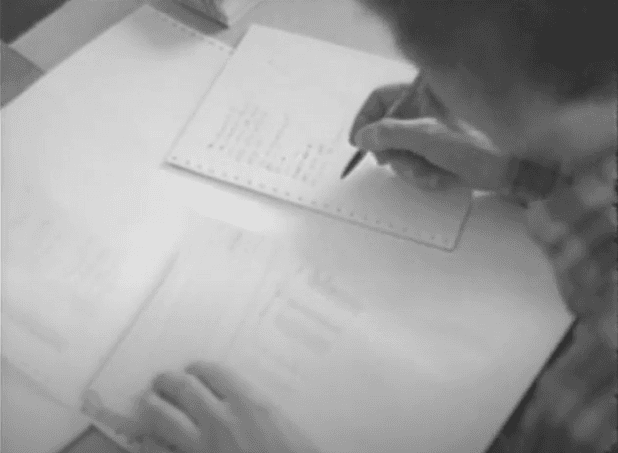
The vision behind c/ode collection
Early Computer Art 1958-80
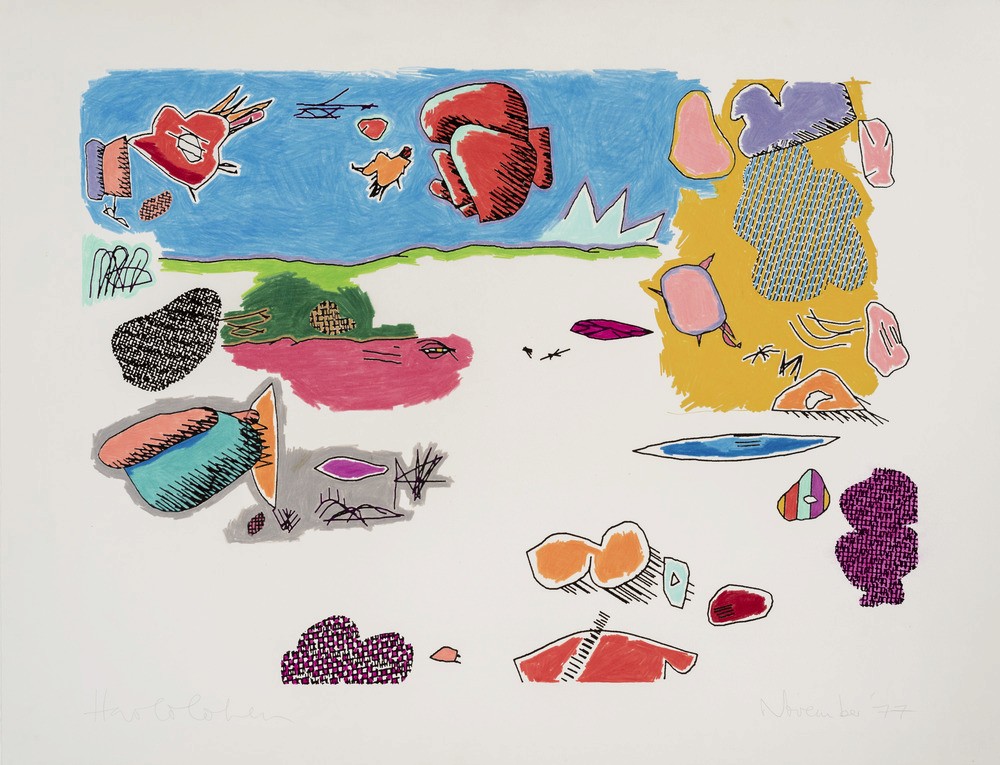
C/ODE safeguards the earliest computer-generated artworks
The code that sparked generative intelligence
So everyone can trace today’s AI back to its first flickers of machine creativity.
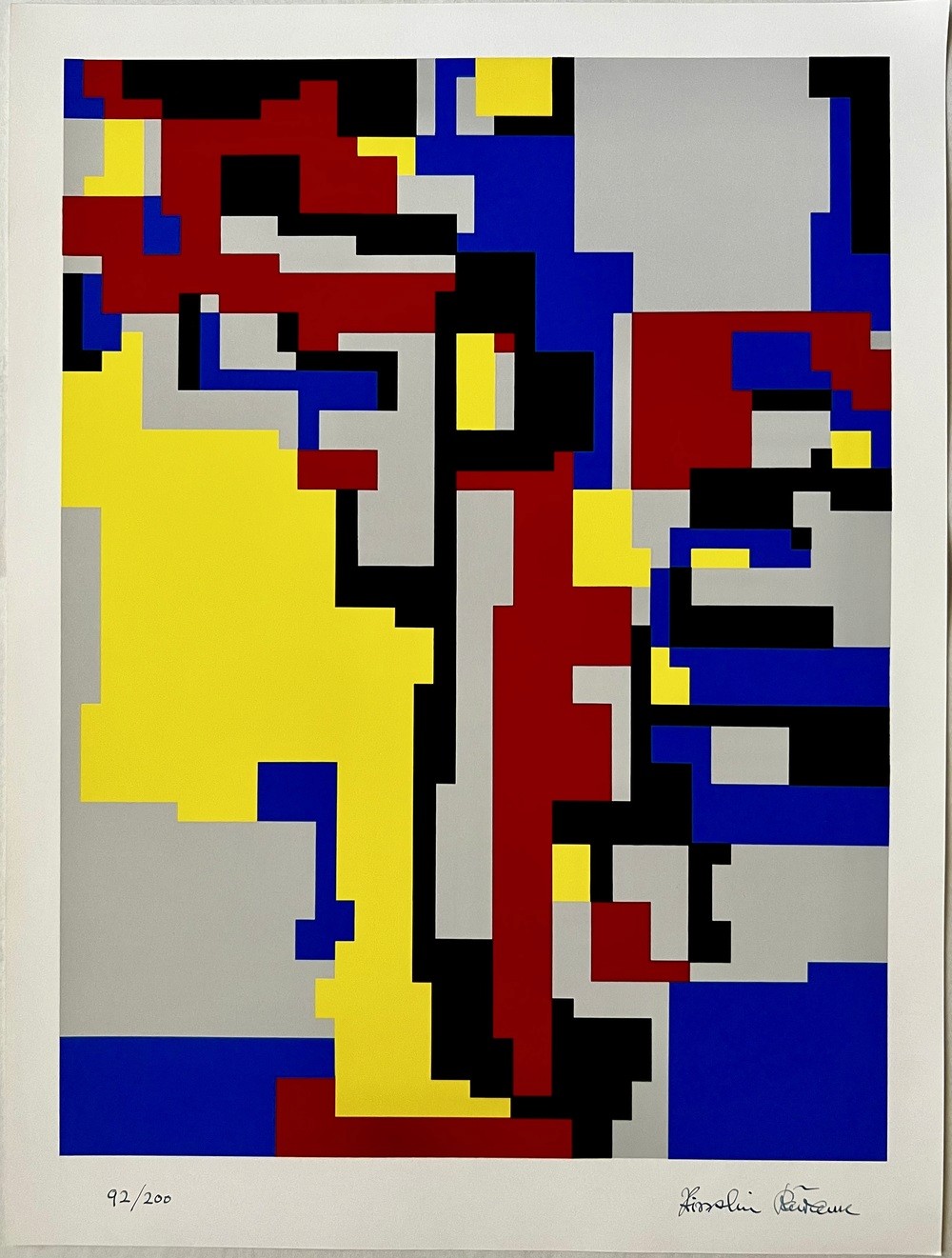
0110
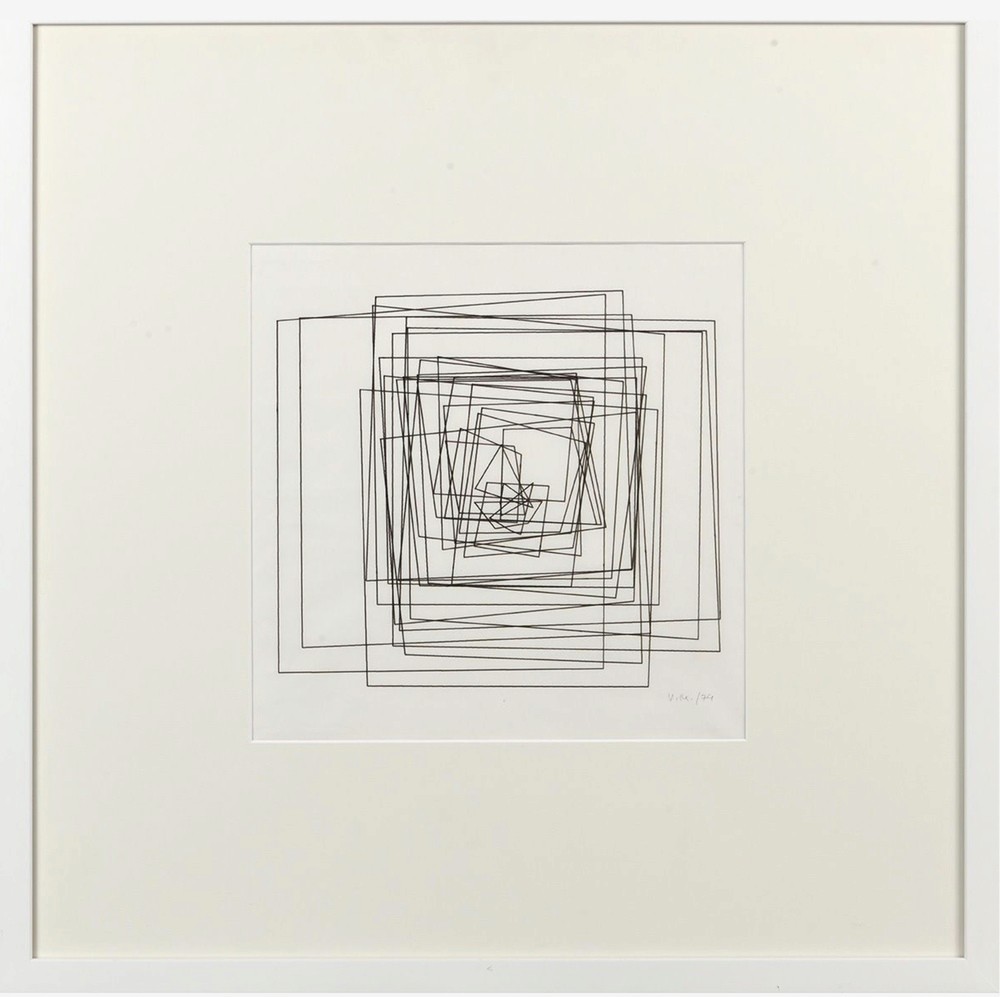
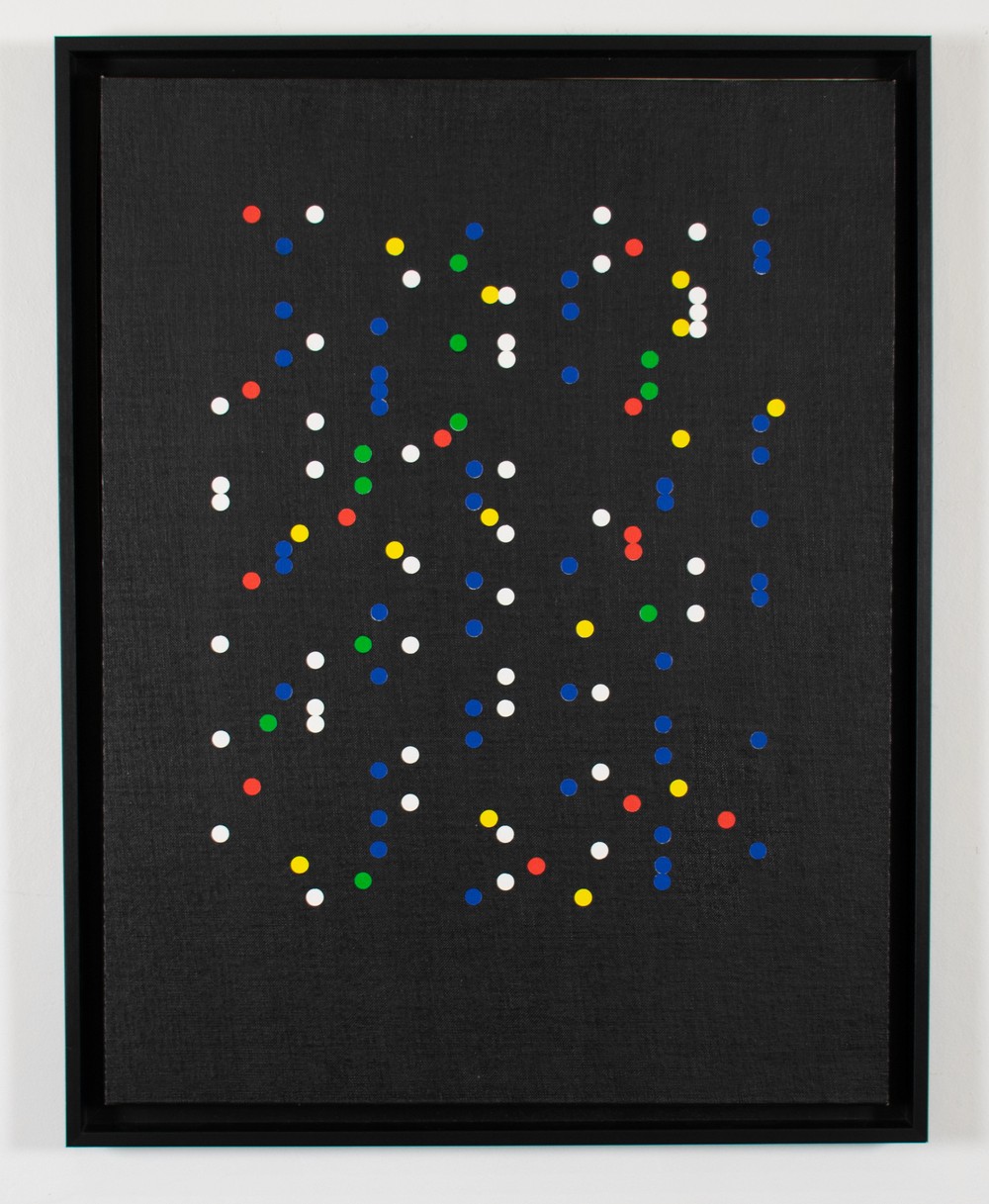
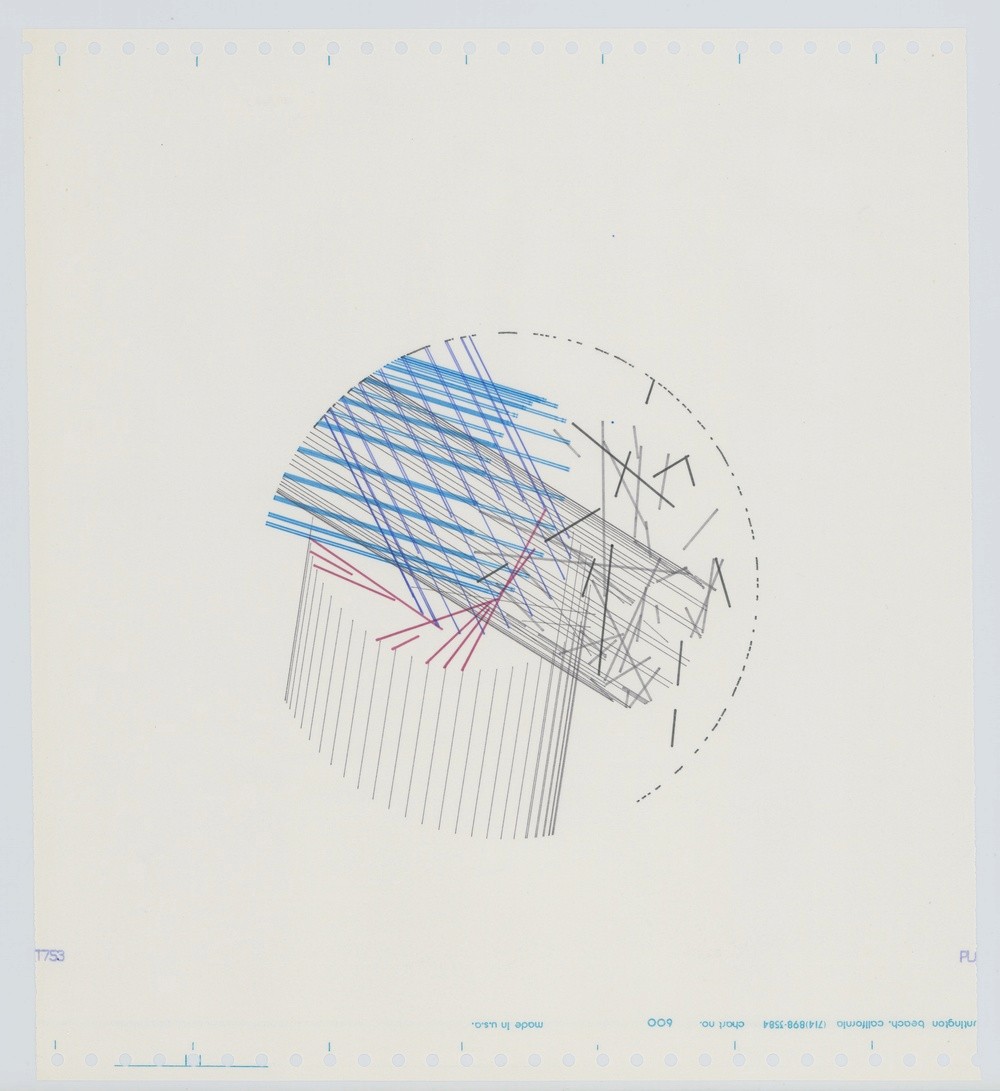
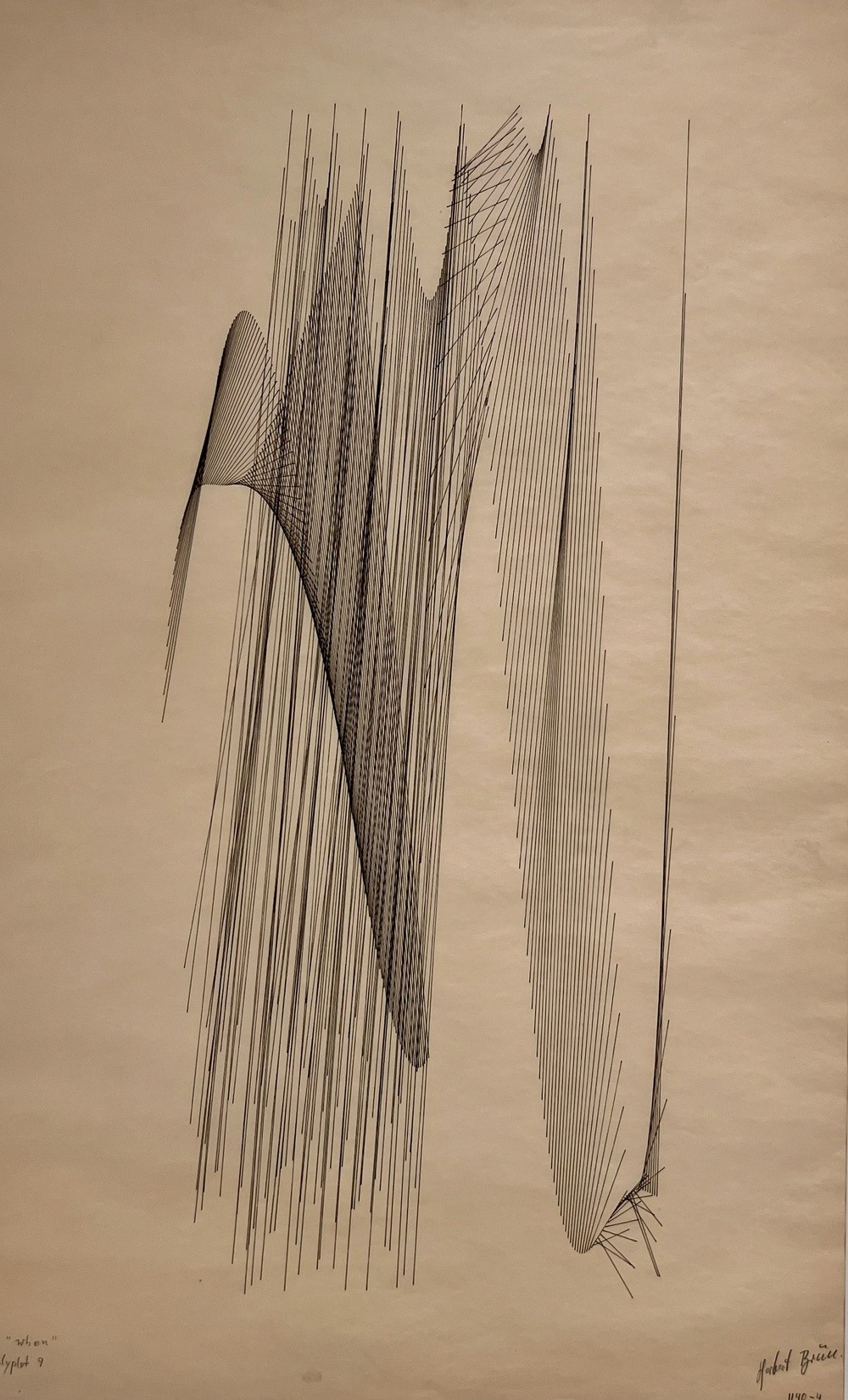

Why C/ODE and why now?
This collection reaffirms the enduring importance of early computer art while significantly expanding our understanding of what computers were — and still are — truly for. By preserving and presenting these pioneering works, we invite everyone to engage with the machines not merely as tools of calculation, but as instruments of imagination, creativity, and boundless possibility.
At its heart, the C/ODE collection exists to demystify computers and the art they helped create. People don’t fall in love with machines themselves — they fall in love with what those machines enable us to make. Through C/ODE, visitors can explore this rich legacy without anxiety, gaining fresh insight into our digital past and a clearer, more hopeful vision of the future.
The collection is intentionally quiet yet deeply resonant. It is here to tell the story of digital and computer art to all who seek it — whether curators and museums researching or borrowing works for exhibitions, scholars tracing the roots of computational creativity, or just curious minds drawn to the joy of discovering these groundbreaking pieces. The entire collection is made available both online and offline, ensuring it remains accessible for serious study, exhibition loans, as well as for the pure pleasure of discovery and appreciation.
0110
0110
0110
1950s-60s
Before “digital art” had a name, it had punch cards, plotters, and analog interference. This was the era when code met canvas through force, not finesse.
Artists tapped into early mainframes, repurposed military equipment, and hacked analog machines to produce waveforms, line plots, and mechanical actions. The early results were raw, mathematical, and structural.
These were the first sketches of generative thinking, produced in complete isolation from the technology world that was used for it.
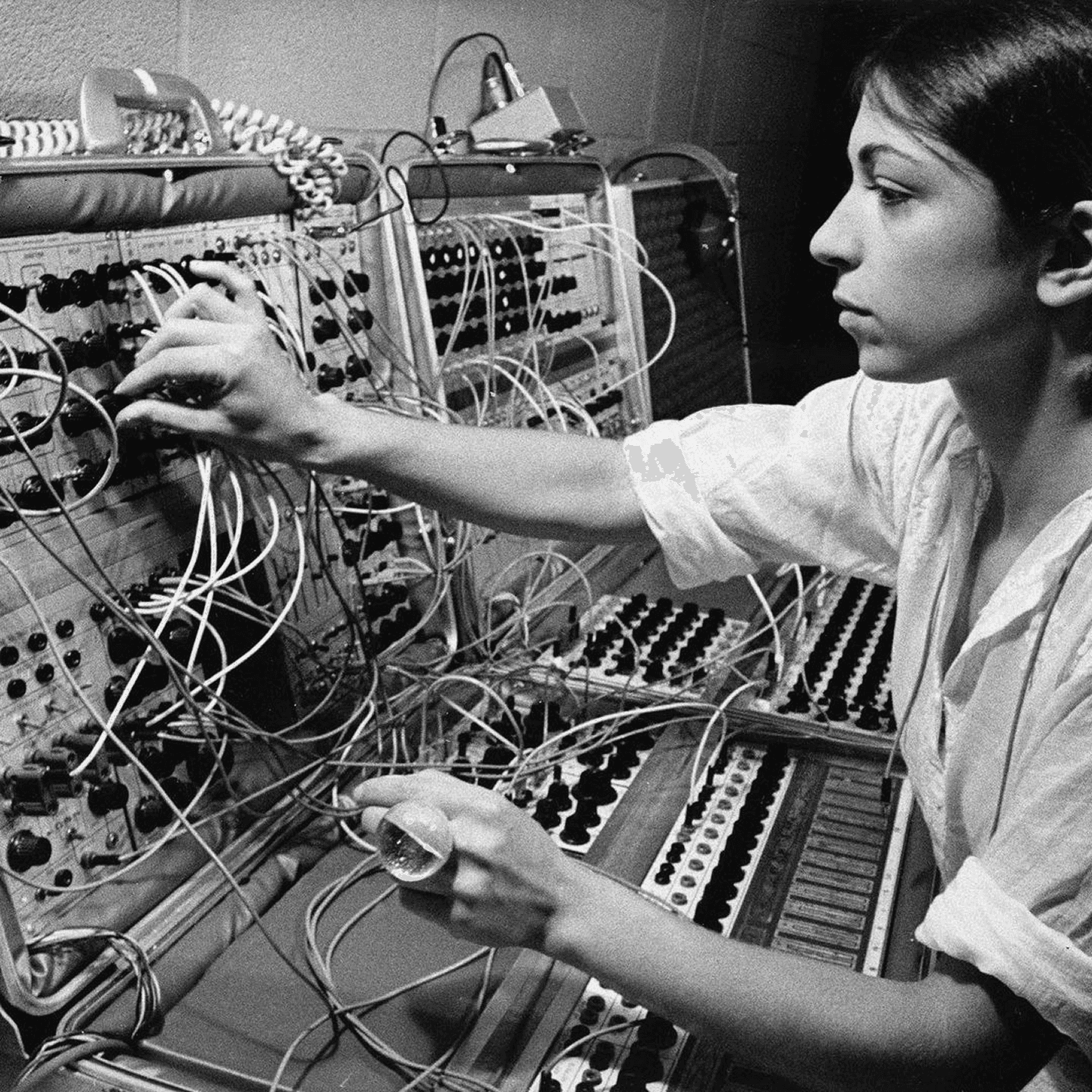
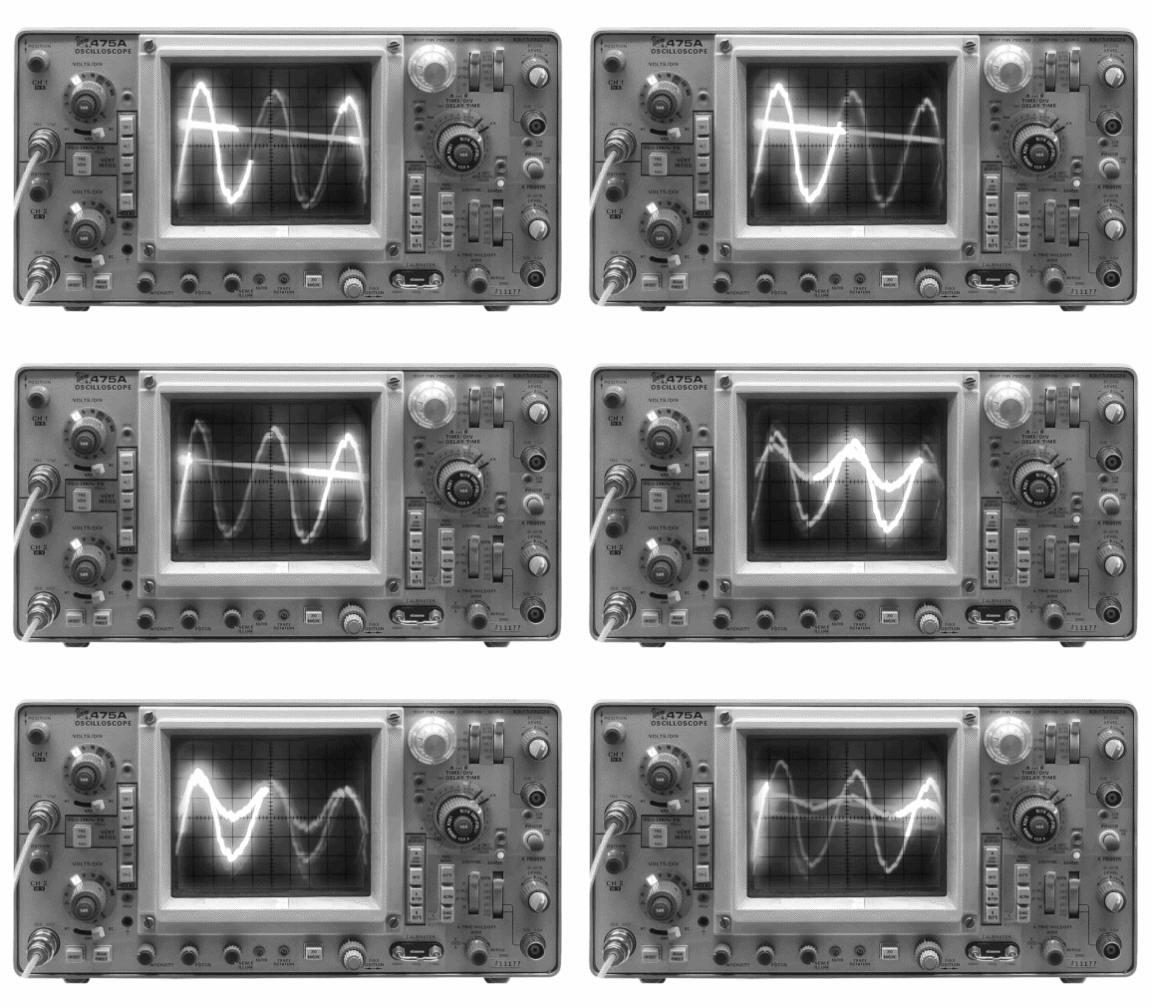
Early computer art wasn’t made with screens - it was built with voltage, punch cards, and plotters. Artists shaped light on oscilloscopes, programmed images line by line on cards, and drew with machines that moved pens like mechanical hands. Every output was a slow, deliberate act of invention.
Methods
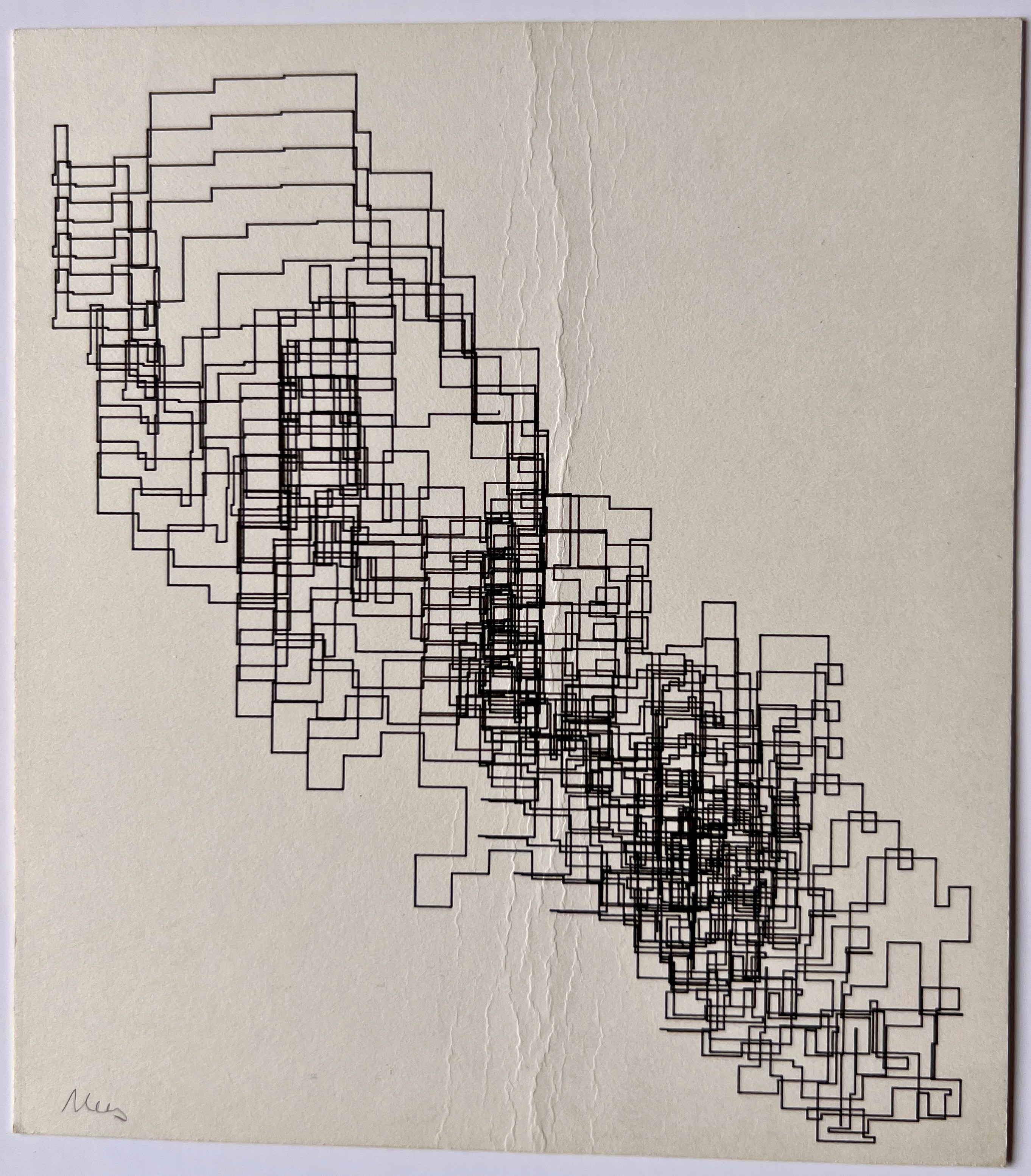
Plotter machines
Born in Germany, fled Nazi rule in the 1930s, and later became a key figure in experimental composition and cybernetic aesthetics in the U.S.
Oscilloscope visuals
Provenance was reconstructed through cross-referencing original code records and surviving technical documentation.
Punch-card programming
Provenance was reconstructed through cross-referencing original code records and surviving technical documentation.
The results were abstract, minimalist, and method-driven.
Artists embraced randomness, constraints, and system logic - not in spite of the limitations, but because of them.
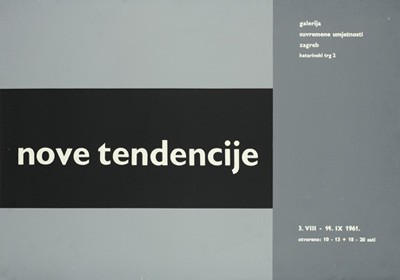
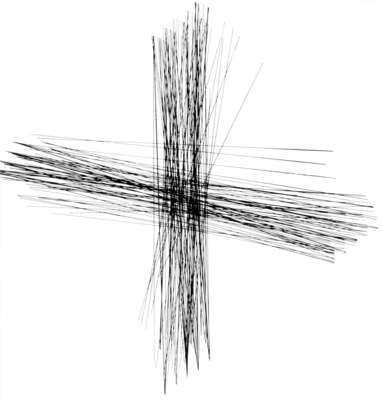
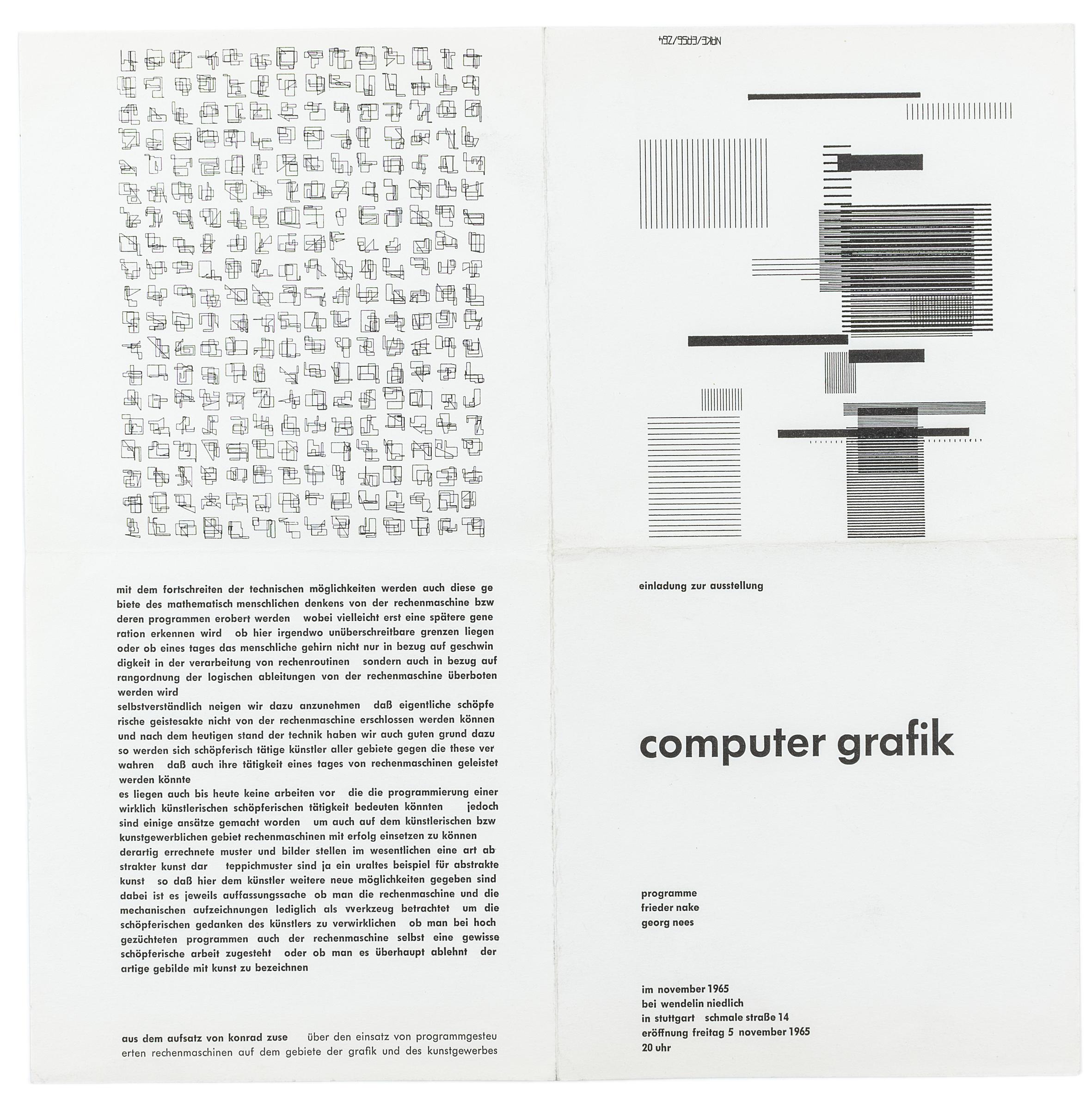
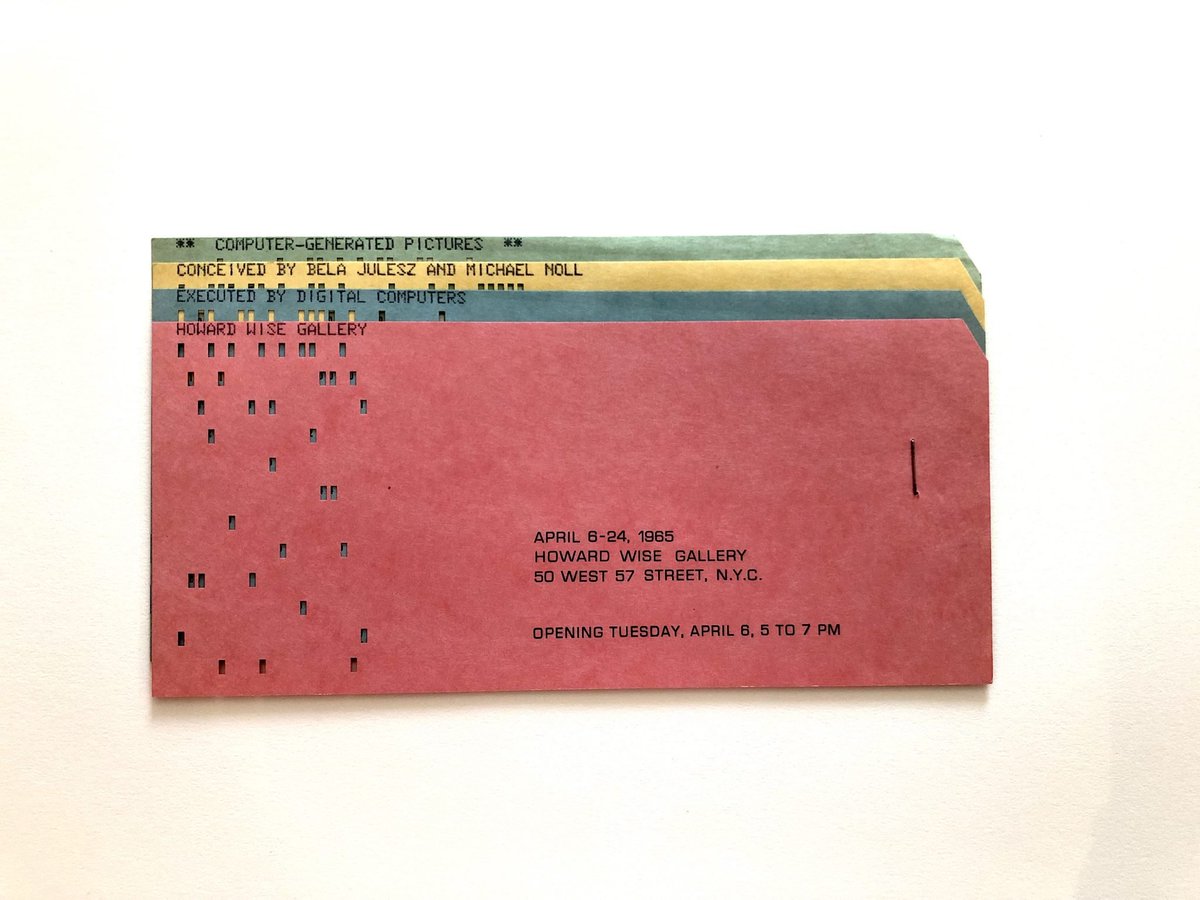
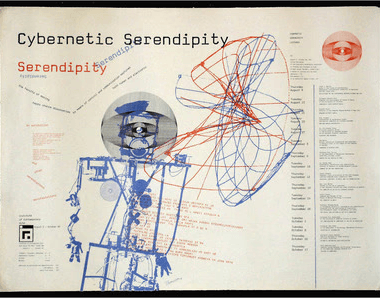
Notable
exhibitions
1970s
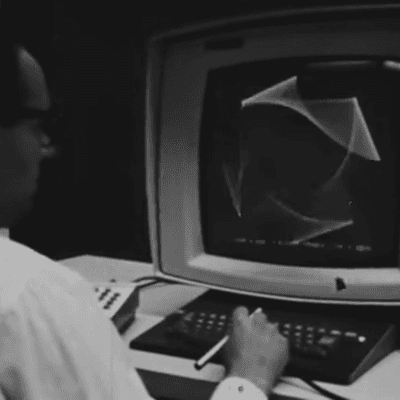
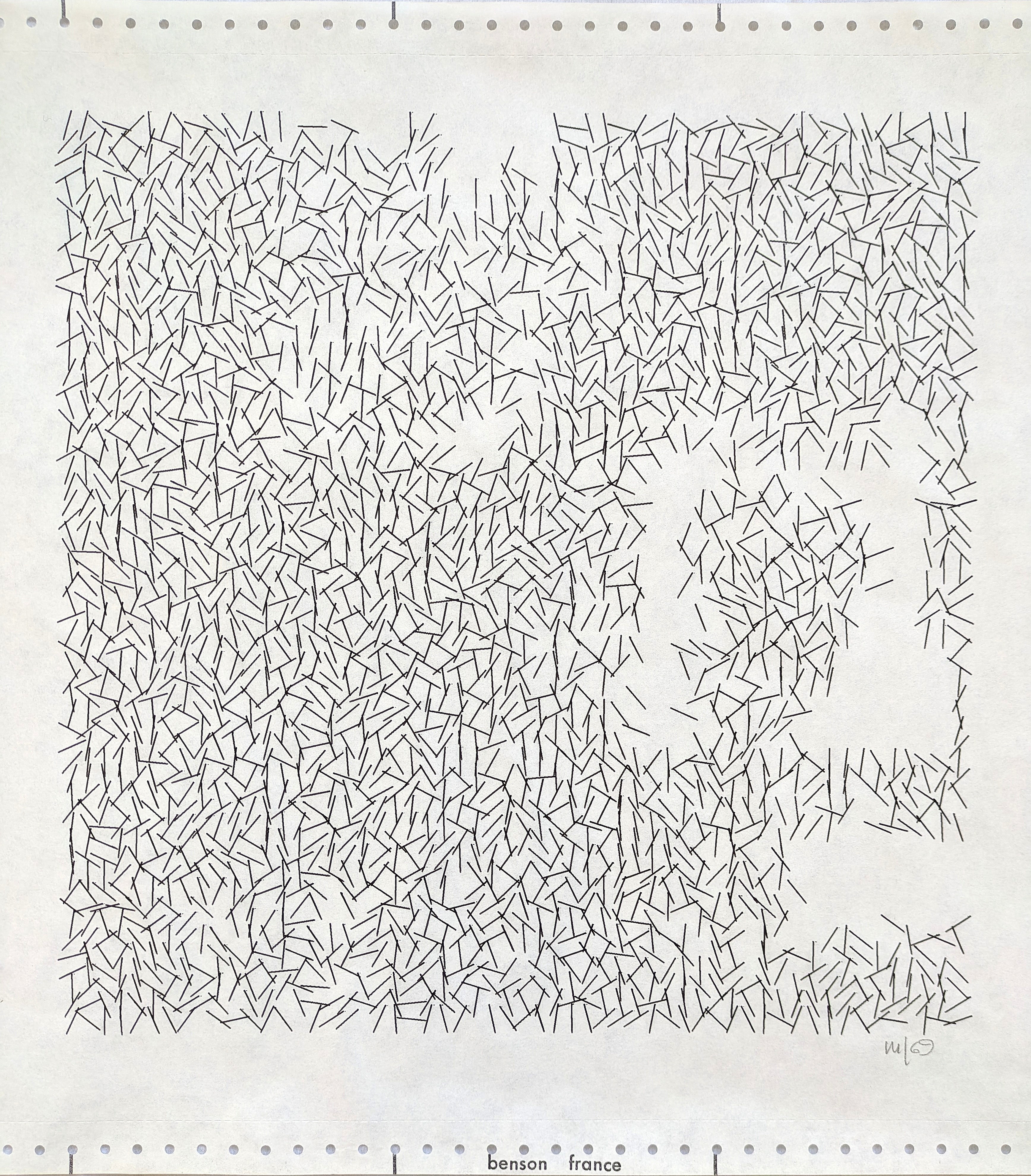
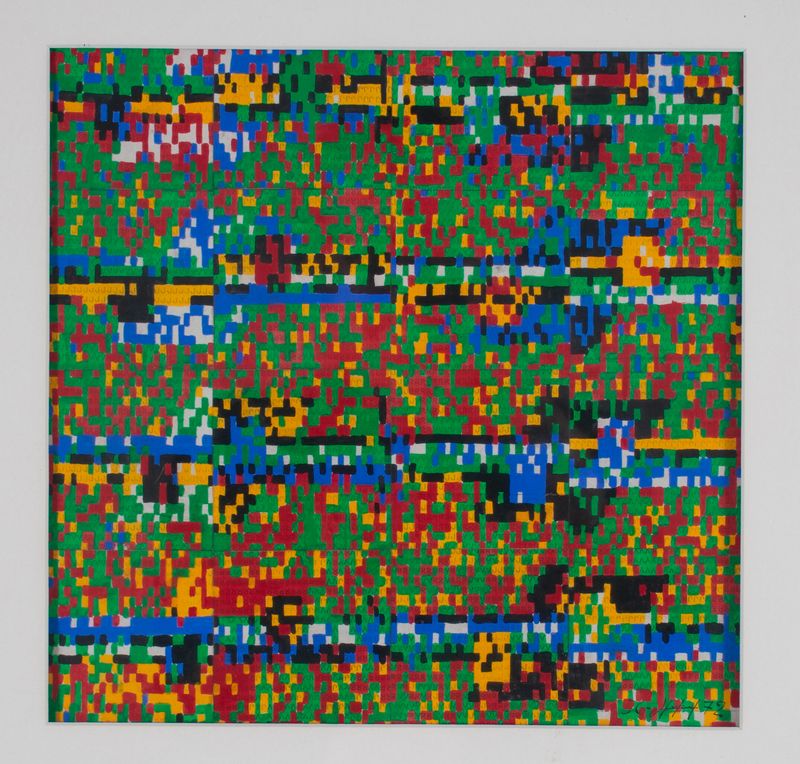
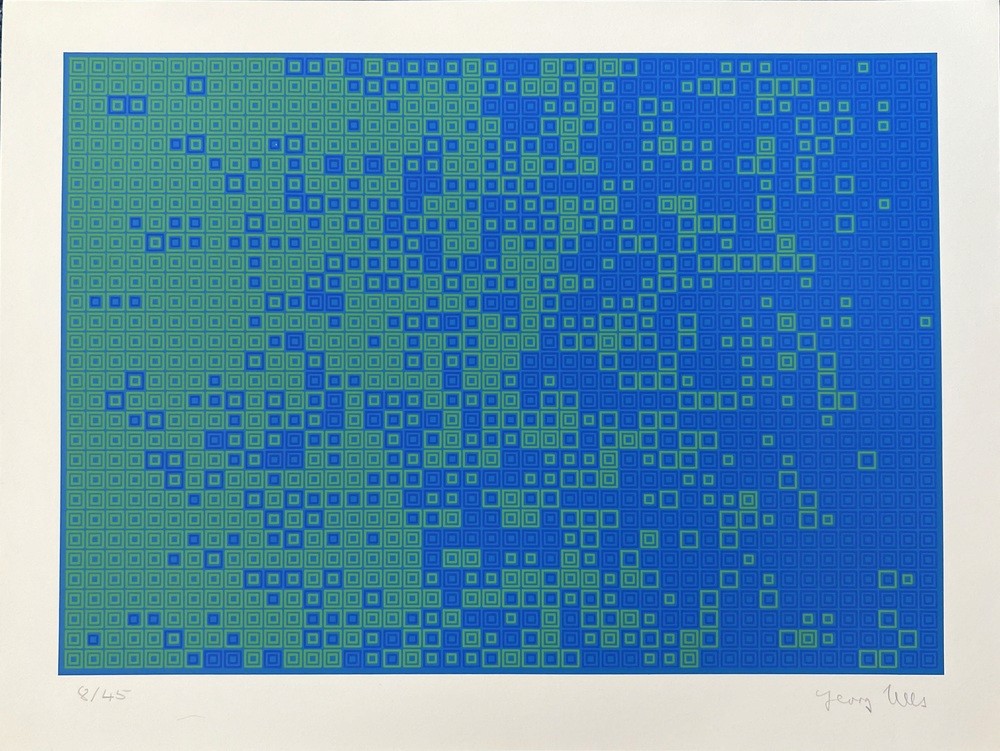
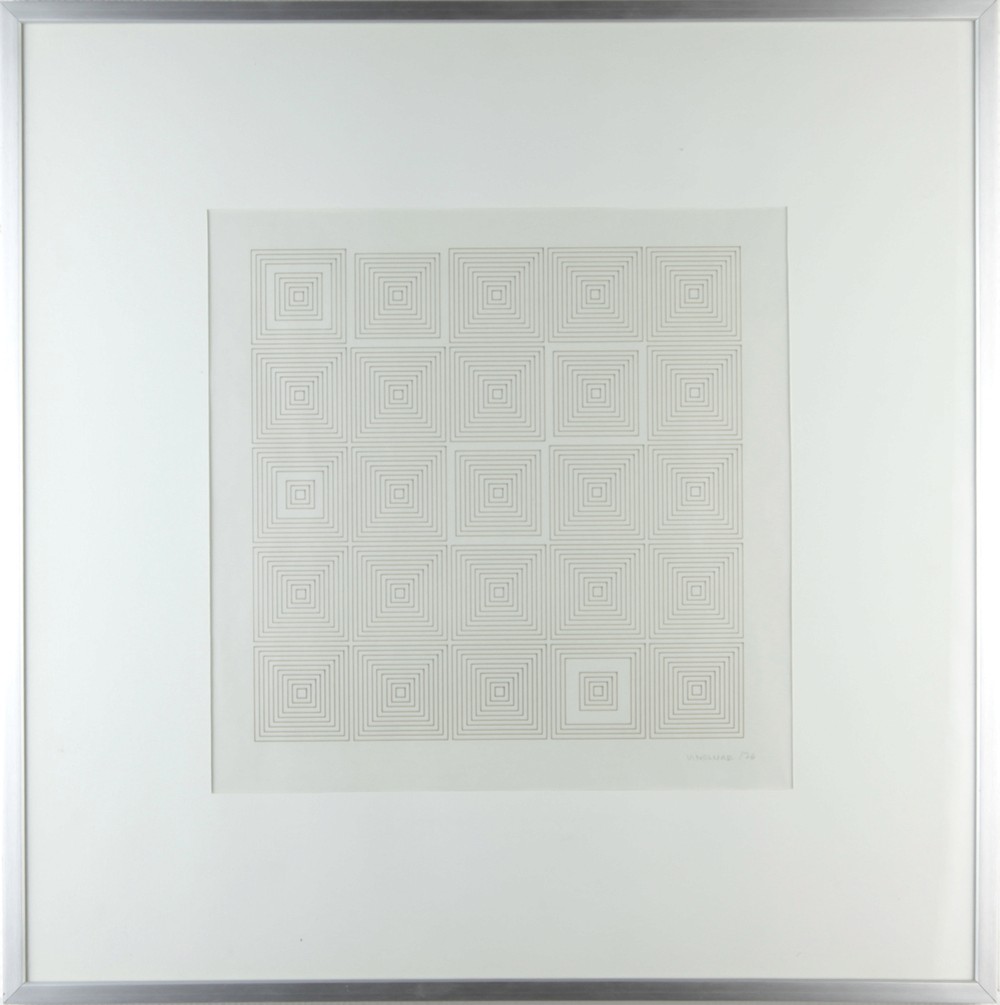
The 1970s were when computer art moved from fringe experiments into structured environments - universities, research labs, and galleries. Artists gained better access to machines like mainframes and early minicomputers, often through institutional connections. The tools were still slow and unwieldy, but the intentions grew more precise: art was no longer just made with code - the code was the art.
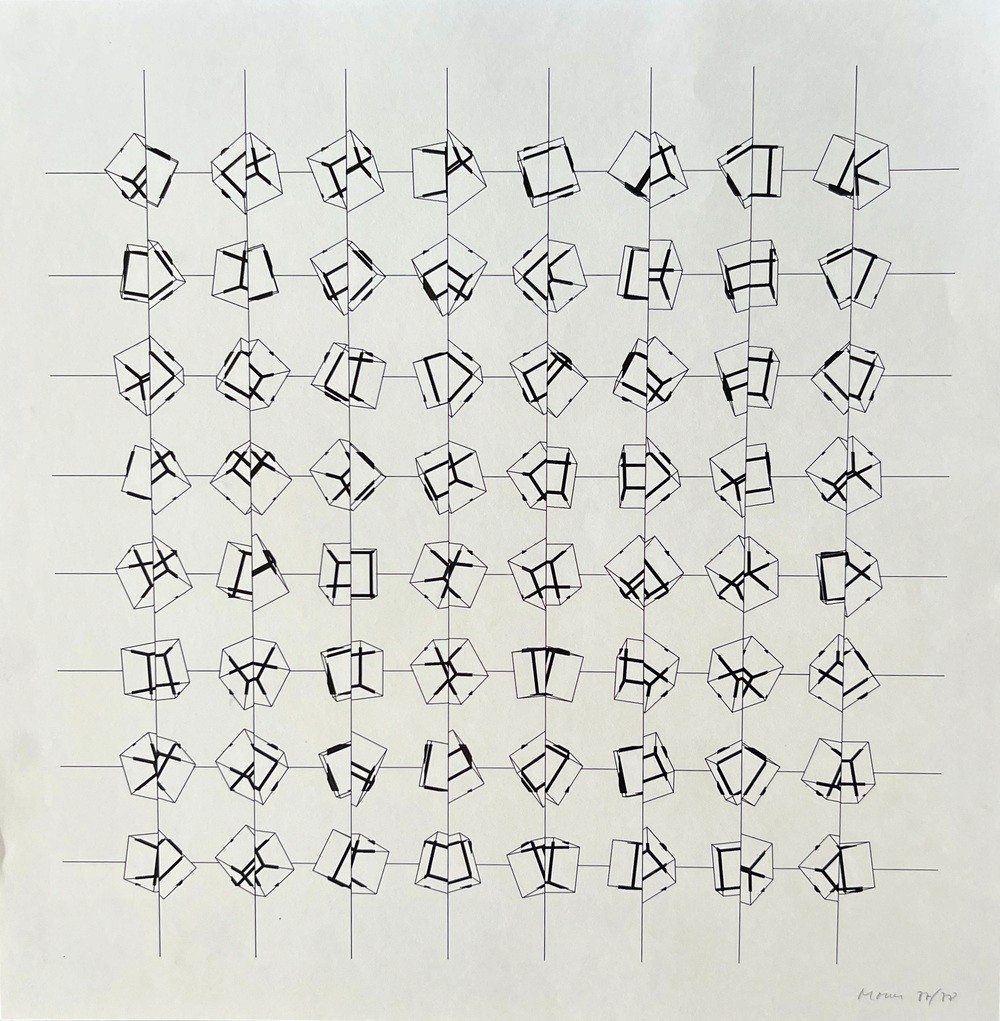
Manfred Mohr excerpt, film by IBM, 1977-1979
1980s
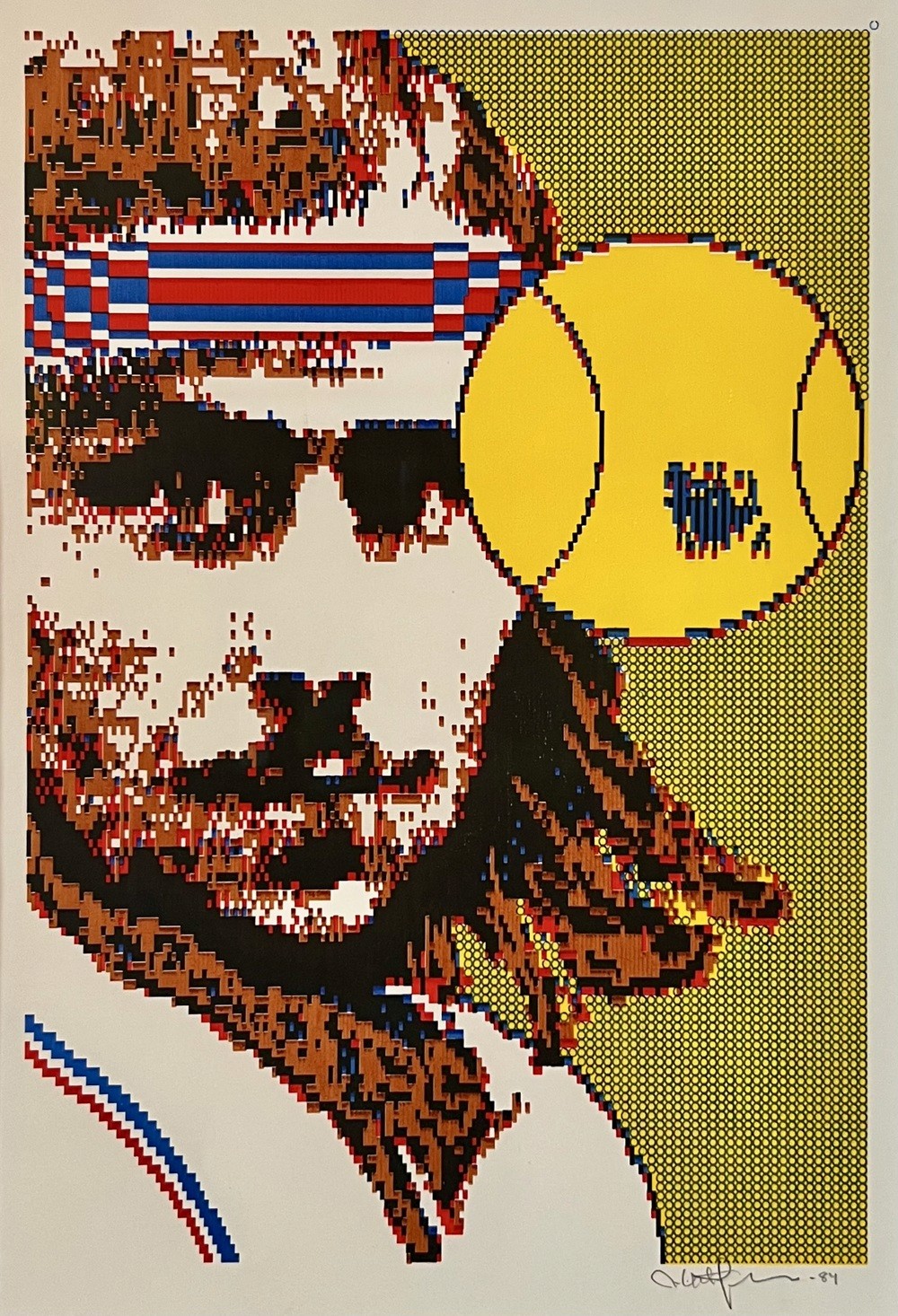
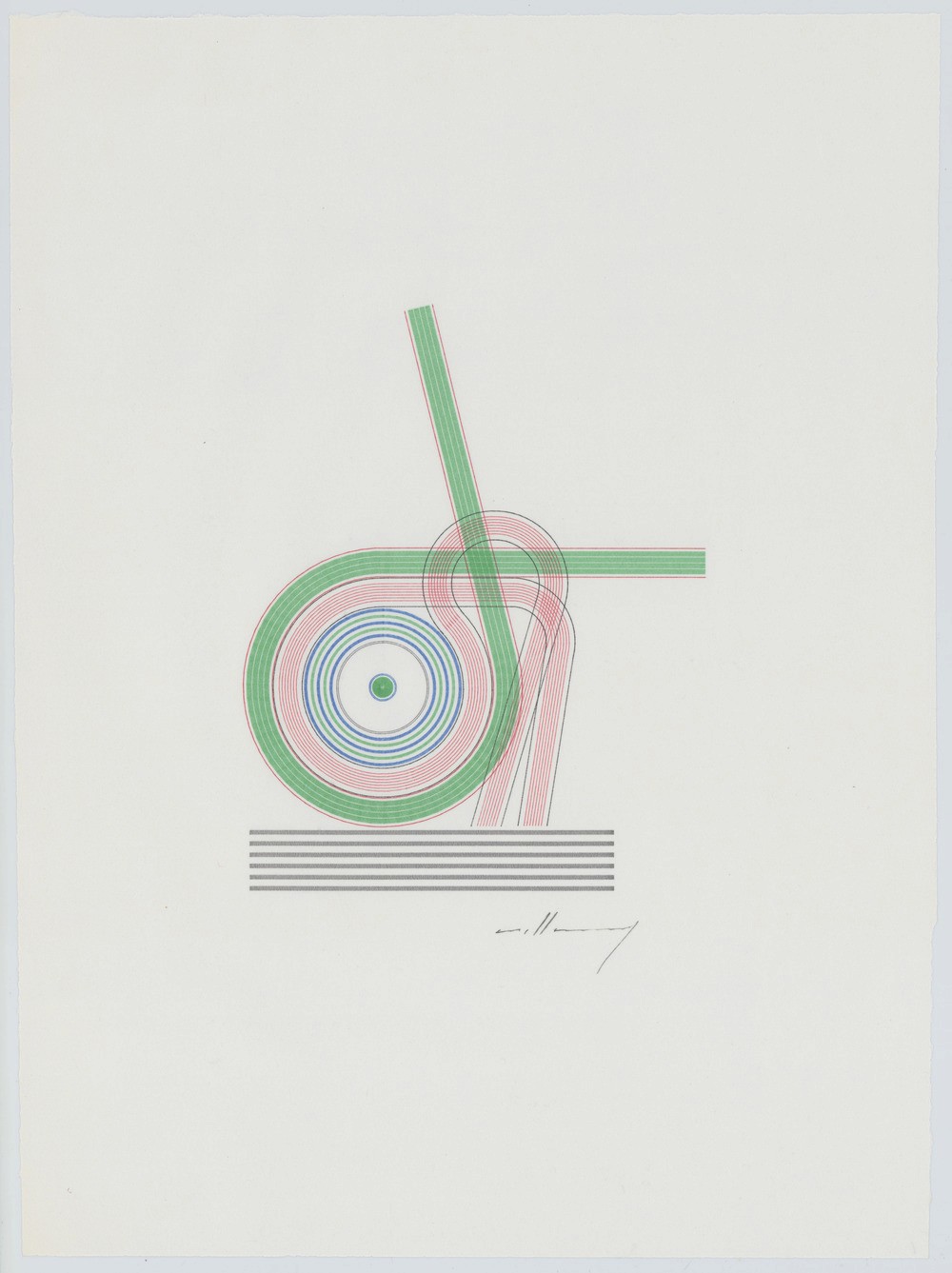
In the 1980s, computer art moved from institutional labs to personal studios as artists gained access to home computers, graphic software, and custom interfaces. The work became more expressive, symbolic, and identity-driven - shifting from code as structure to interface as medium. Art explored pixels, motion, and interaction, reflecting a growing curiosity about selfhood in digital space. The machine was no longer just a tool - it was a collaborator, a mirror, and a stage.
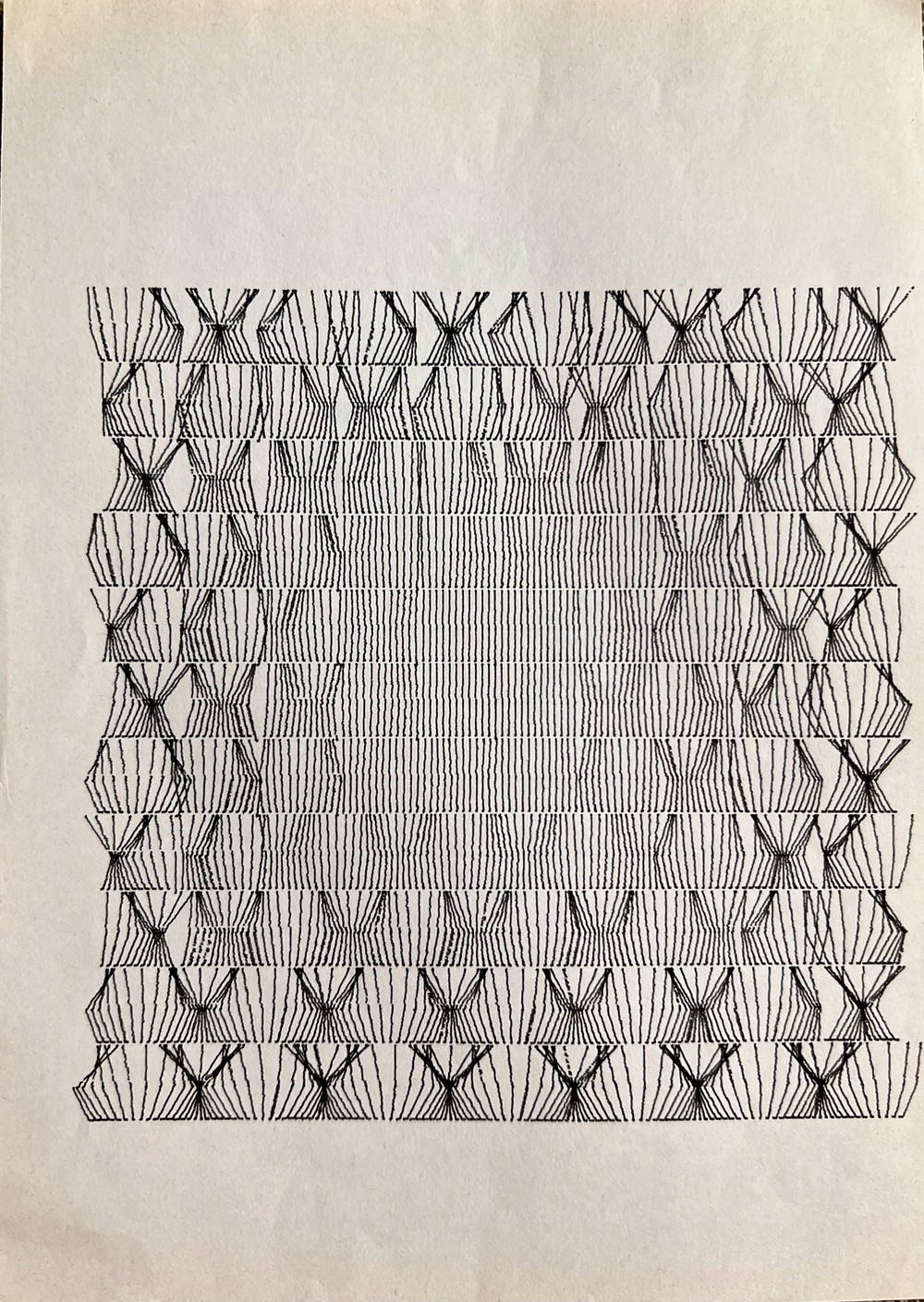
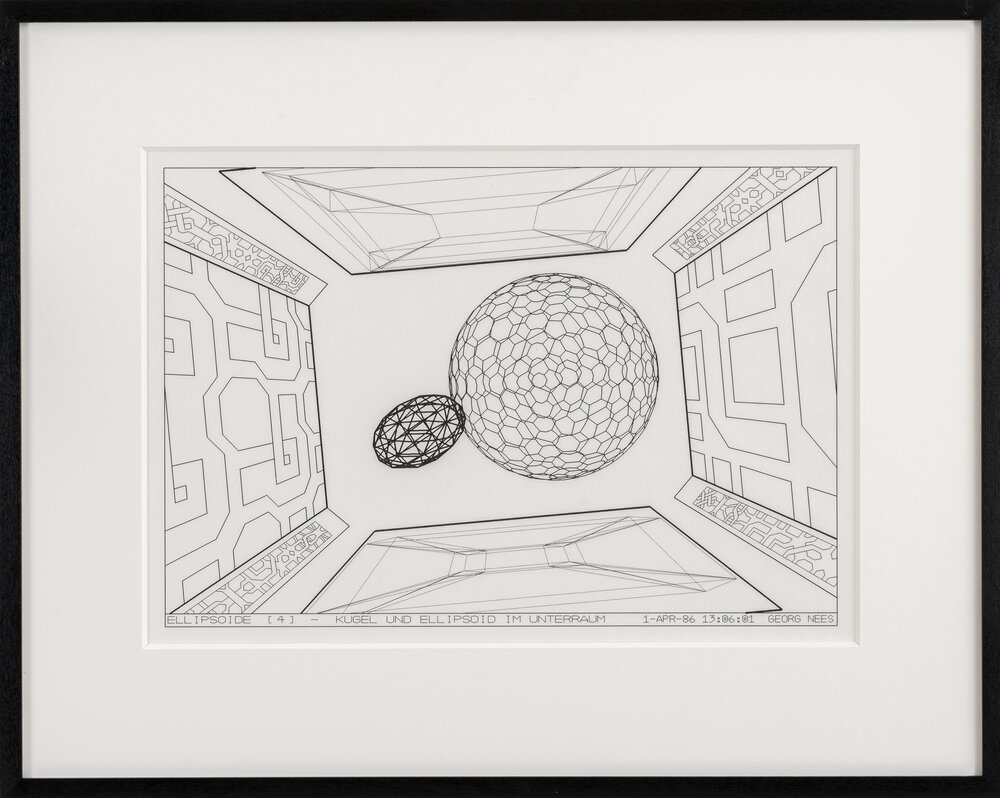
The new visual age
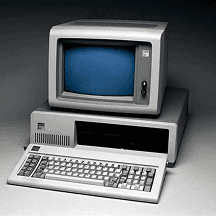
Personal computers
Microcomputers lowered barriers: anyone with a home computer and a TV could generate images. Personal computers like the Apple II, Commodore 64, Amiga, and IBM PC allowed artists to work independently - no more reliance on lab access or institutional machines.
Interactivity
Interactivity became central: users could manipulate parameters in real time, creating variations and animations instead of static plots. Feedback loops, simulation, and direct manipulation replaced static plotting.
Early AI
In the 1970s, artist Harold Cohen created AARON, one of the first true examples of artificial intelligence in art. Unlike today’s AI, AARON wasn’t trained on data - it was hand-coded to generate original drawings on its own, evolving over decades from abstract forms to full-color figures. It didn’t mimic; it created — acting as both tool and creative partner.
Technology and tools used
by the artists
The process of creating early computer art was a slow, technical and unforgiving grind.
It demanded engineering skill, precise planning, and endless patience just to produce a single image.
Punchcards
Before screens and keyboards, artists programmed computers using punch cards - paper cards with holes punched to represent code. Each card held one line of instructions.
Each punch card represented a single line of code, which were meticulously stacked on top of each other to create an input command.
To run a program, you fed a stack of these into a card reader. One wrong punch or misordered card could crash the whole thing. For computer artists, it meant writing code blindly - and waiting hours to see if the machine drew what they imagined.
Plotters
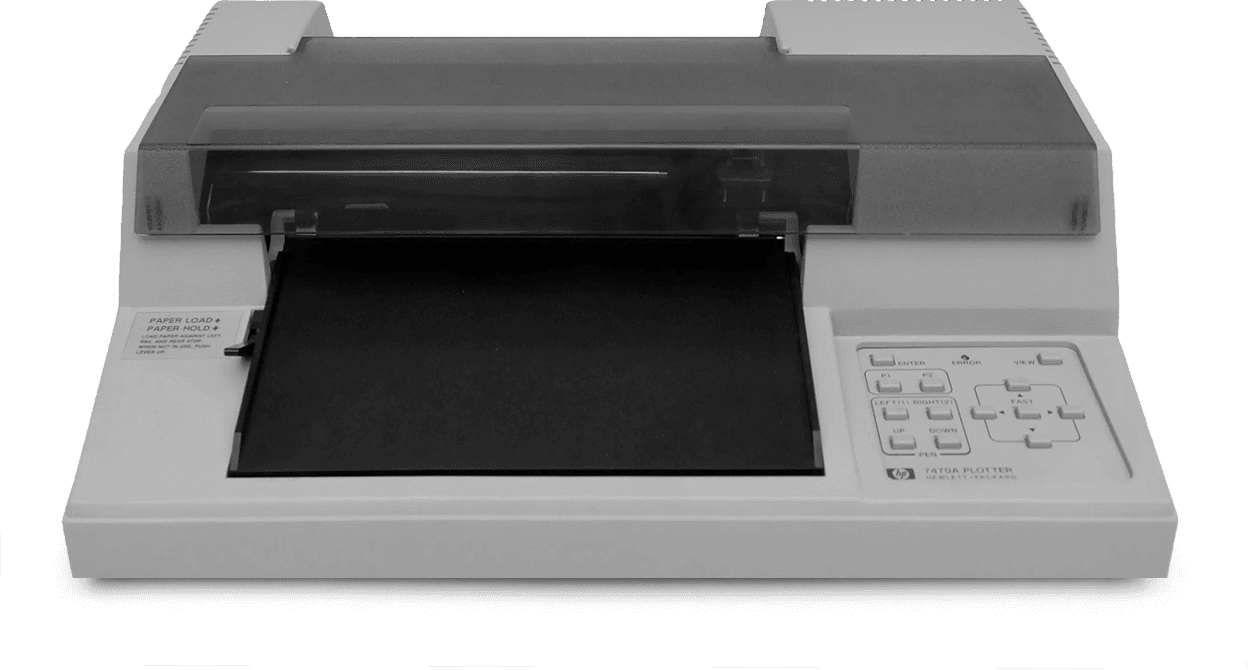

The mechanical symphony of servos, linkages and computer code, all synchronizing together to create the sounds of the artificial entity coming to life
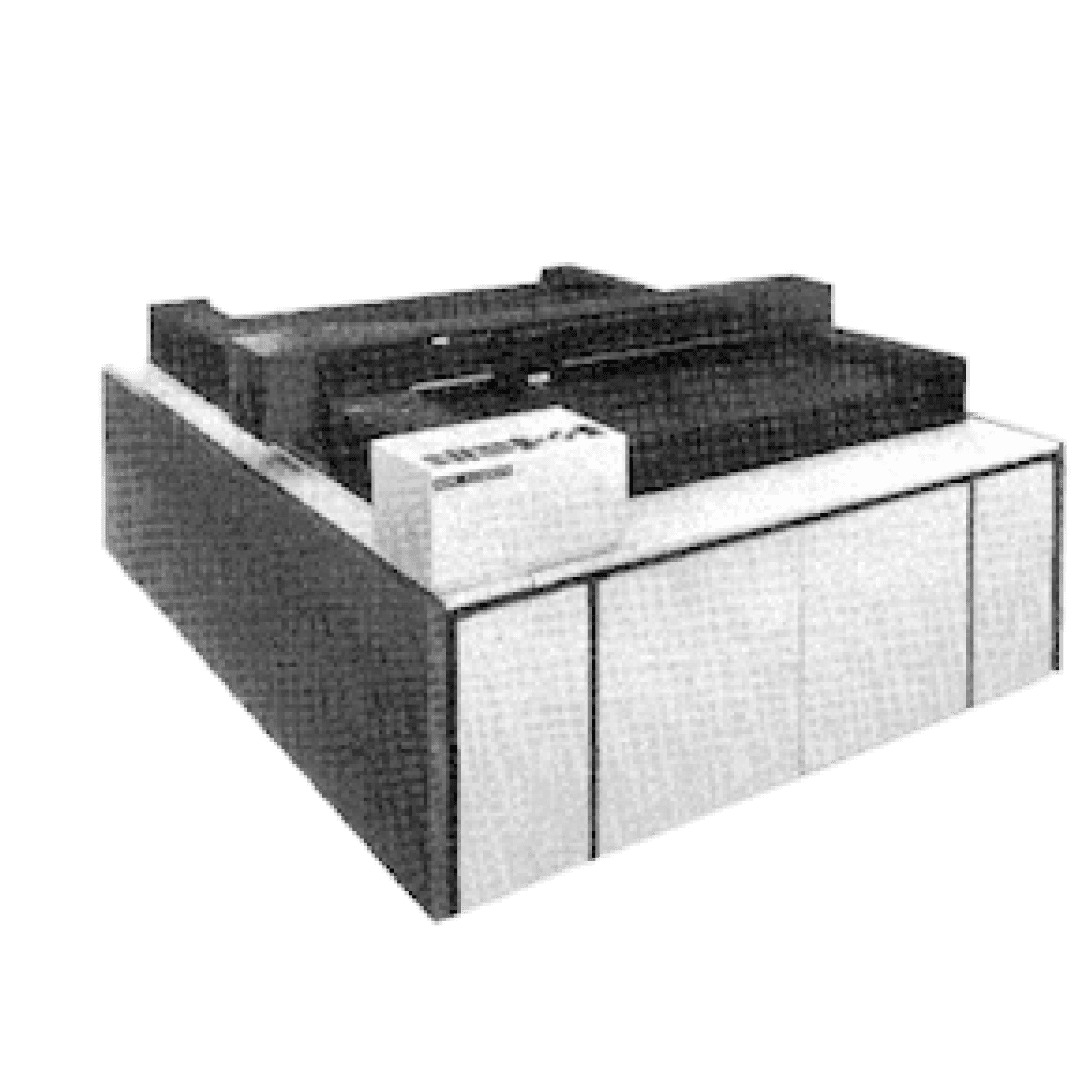
Plotters were the machines that drew computer art line by line, long before screens were common. Unlike printers, which use dots, plotters used real pens moved by motors to draw smooth, precise curves on paper.
Artists wrote code to control every movement - from pen pressure to direction - turning mathematical instructions into physical images. Slow, loud, and mesmerizing, plotters made the invisible work of algorithms visible, one stroke at a time.
Mainframe computers
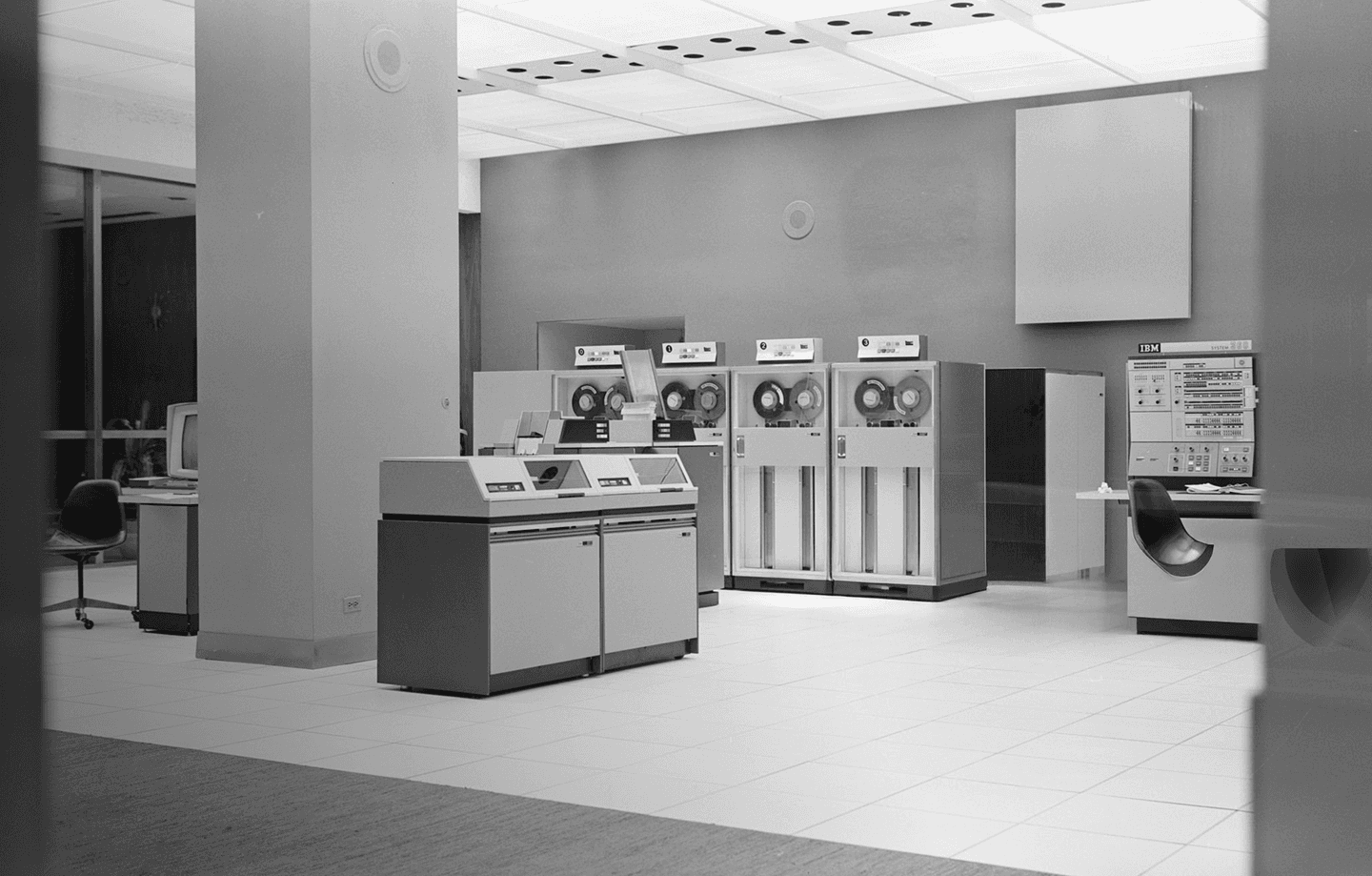
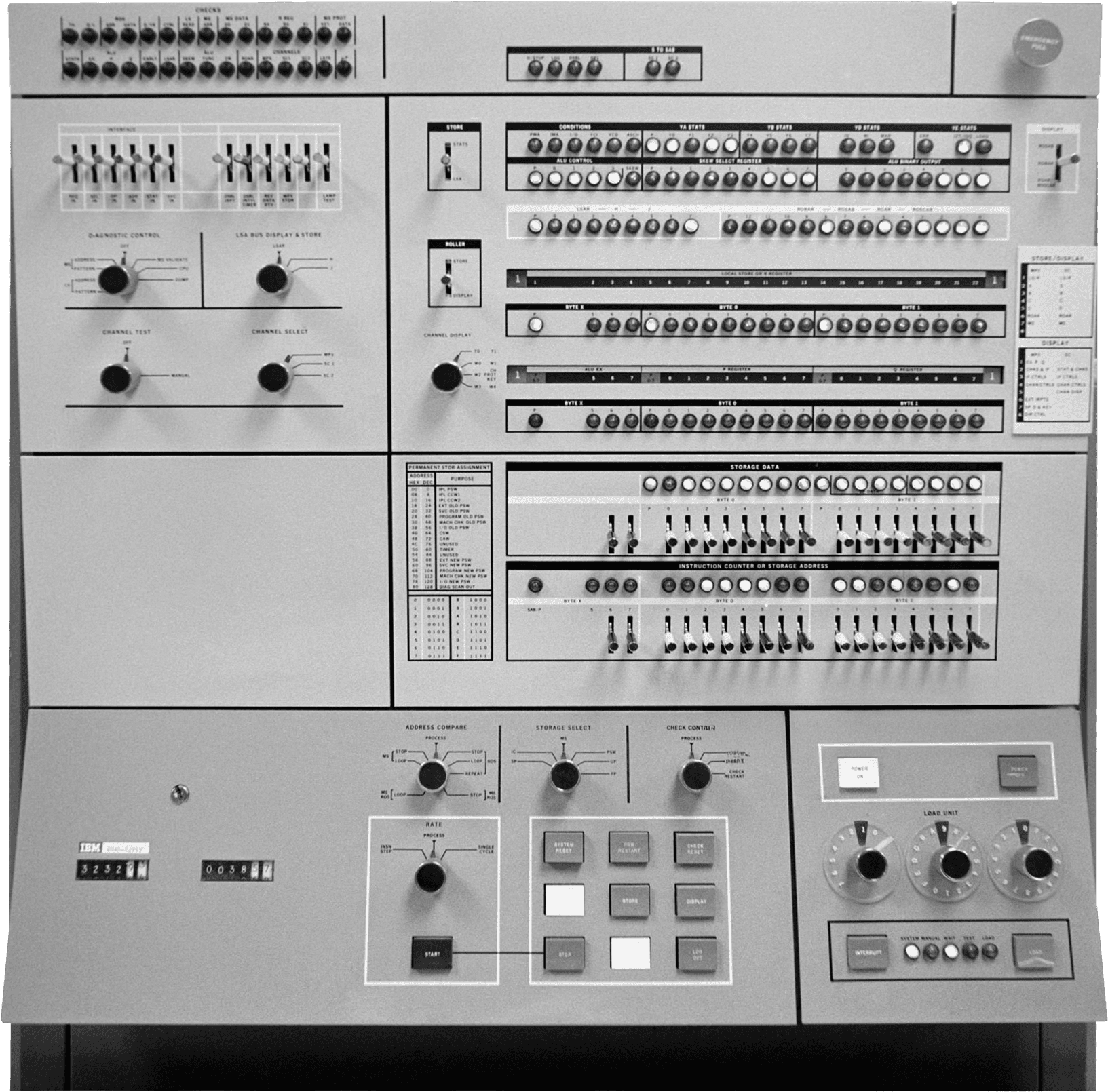
Mainframe computers were the giants of early computing - room-sized machines operated by technicians, not artists. But in the 1960s and ’70s, a few determined creators gained access through universities and research labs. Programming them meant feeding in punch cards and waiting hours - or days - for a result. There were no screens, just plotters, printers, and tape reels. Despite their bulk, mainframes produced some of the earliest algorithmic art, one line of code (and one line of ink) at a time.
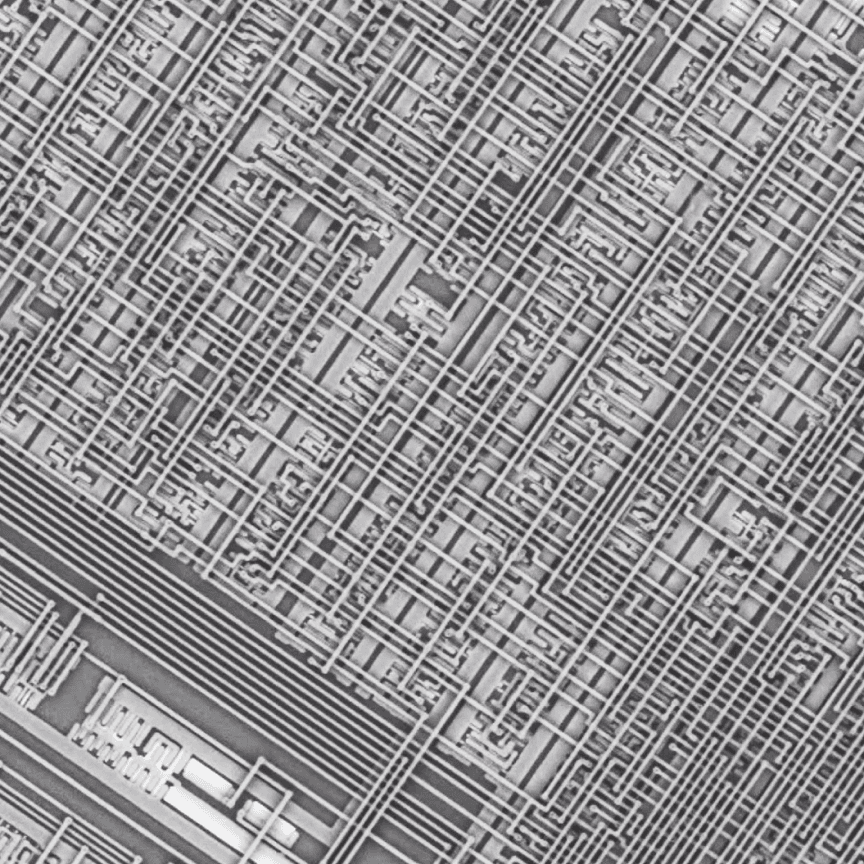
Mainframe computers of the 1960s were millions of times slower than today’s smartphones - taking hours to complete tasks that now run in milliseconds.
1 mainframe computer transistor
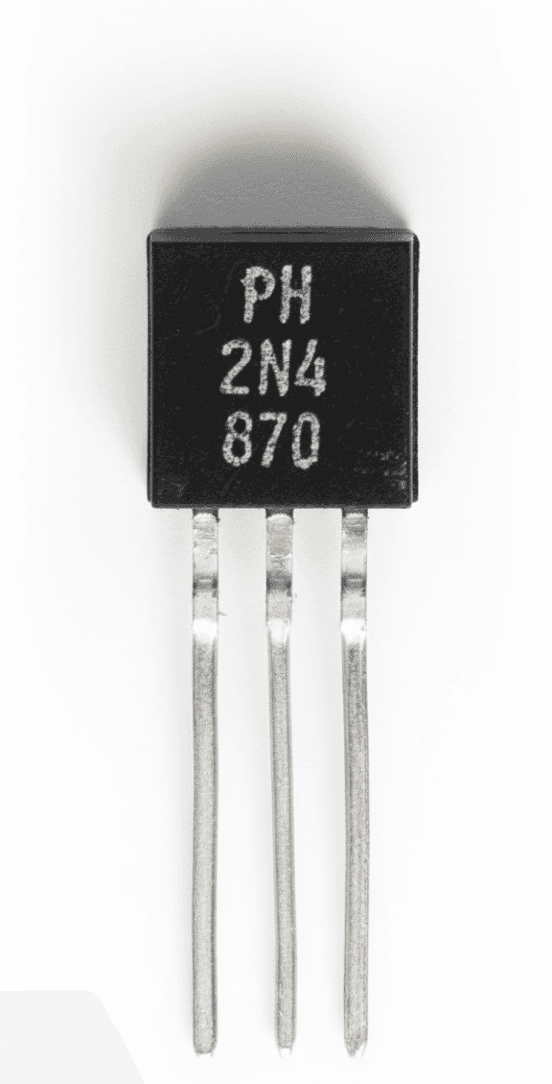
100,000 smartphone transistors
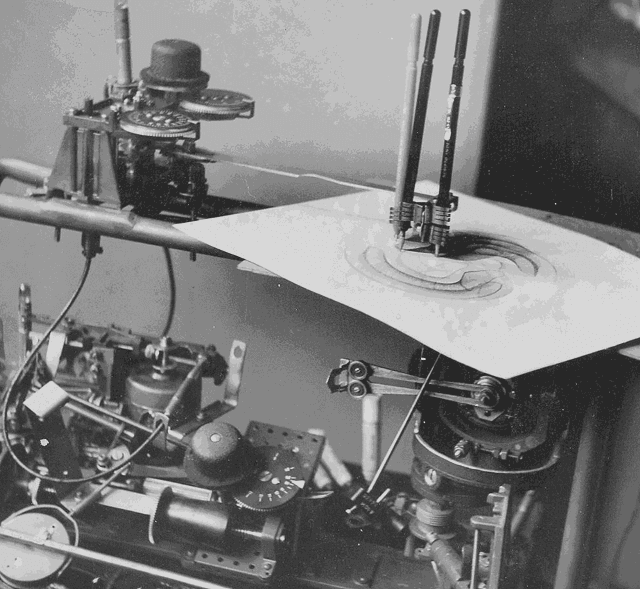
Desmond Paul Henry
From bombsight analogue computers to drawing machines
Desmond Paul Henry was a British artist and philosopher who, in the late 1950s and ’60s, repurposed WWII bombsight analog computers into custom-built drawing machines. Instead of targeting coordinates, his machines generated looping, intricate curves - early examples of machine-assisted abstraction. His work predated digital computing in art, blending wartime technology with a poetic sense of mechanical chance.